
1000 lb Adjustable Bed Frame: What It Means & Why It Matters
 Bloomehome
December 23, 2025
0 Comments
Bloomehome
December 23, 2025
0 Comments
In This Guide
- Why weight capacity is the most overlooked spec
- What “industry standard” actually means
- Steel vs aluminum: the material difference
- Who actually needs a 1,000 lb frame
- How Bloome compares to other brands
- What else to look for beyond capacity
- Frequently asked questions
- Shop the Bloome Steel Frame
Why Weight Capacity Is the Most Overlooked Spec
When most people shop for an adjustable bed, they focus on features: massage motors, USB ports, zero gravity presets, app connectivity. Weight capacity rarely makes the checklist — and that’s a mistake that costs buyers money, comfort, and sometimes safety.
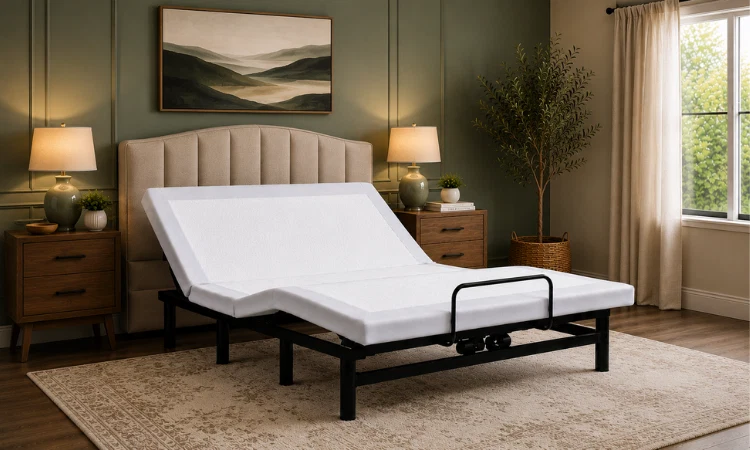
An adjustable bed frame is a mechanical system. It flexes, elevates, pivots, and supports load across multiple articulation points simultaneously. Every one of those movements places stress on the frame, the motors, and the connection hardware. A frame rated for 600 lbs behaves very differently under a 400 lb load than one rated for 1,000 lbs — and not just at the extremes. If you want to understand the full picture before committing, our guide to affordable adjustable bed frames covers the key trade-offs across every price tier.
The key insight: Weight capacity isn’t just about how much you and your partner weigh. It’s about the cumulative load including mattress weight, bedding, and the dynamic stress created every time the frame adjusts position. A frame operating near its limit degrades faster, runs noisier, and develops wobble over time.
A 1,000 lb rated adjustable bed frame isn’t exclusively for heavier sleepers. It’s for anyone who wants a frame that operates well within its engineering limits — which translates directly into quieter motors, smoother adjustments, less vibration, and a longer working lifespan.
capacity
capacity
frame competitors
What the “Industry Standard” Actually Means
The industry standard for adjustable bed weight capacity sits at 600–750 lbs — enough to cover a broad majority of couples when you factor in a typical mattress (60–100 lbs for a queen) and standard bedding.
But “industry standard” is a floor, not a badge of quality. It means the frame passes the minimum threshold — not that it’s been over-engineered for durability, not that it runs quietly under sustained load, and not that it’ll hold up through 10 years of nightly use without degrading.
Watch out for this: Some brands advertise “per-side” capacity on split king models — meaning a 600 lb “per side” frame is technically rated for 1,200 lbs total. That’s legitimate marketing, but make sure you’re comparing total-frame capacity when shopping, not half-frame numbers. Our queen size adjustable bed frame guide breaks down how to read capacity specs correctly by size.
How manufacturers inflate perceived capacity
A handful of tactics are common in the adjustable bed space:
- Static vs dynamic ratings — a frame might hold 750 lbs stationary but be rated lower under movement. Look for frames tested under full articulation.
- Motor capacity vs frame capacity — some brands list the motor’s rated lift force, not the frame’s structural limit. These are not the same number.
- Mattress excluded from the rating — a “700 lb capacity” frame that excludes mattress weight gives you far less usable capacity than advertised.
The cleanest spec to look for: total frame capacity, inclusive of mattress, tested under full movement. That’s what Bloome publishes: 1,000 lbs, full load, full articulation.
Steel vs Aluminum: The Material That Makes the Difference
Most adjustable beds at the sub-$2,000 price point are built on aluminum or composite frames. Aluminum is light, doesn’t rust, and is cheap to manufacture — which is why it dominates the market. But there’s a material physics problem: aluminum has a lower yield strength than steel, meaning it begins to deform under sustained load at a lower threshold.
Steel — specifically powder-coated reinforced steel — has roughly three times the tensile strength of aluminum at equivalent thickness. That’s materials science, not a marketing claim. In practice it means:
- Higher load without flex — steel frames don’t develop the micro-flex that causes creaking in aluminum over time
- Better motor longevity — motors on a rigid steel frame work less hard to achieve the same position changes
- Longer lifespan — steel doesn’t fatigue at joint points the way aluminum does under repeated articulation cycles
- Corrosion resistance — powder coating on steel outperforms bare aluminum in humid environments
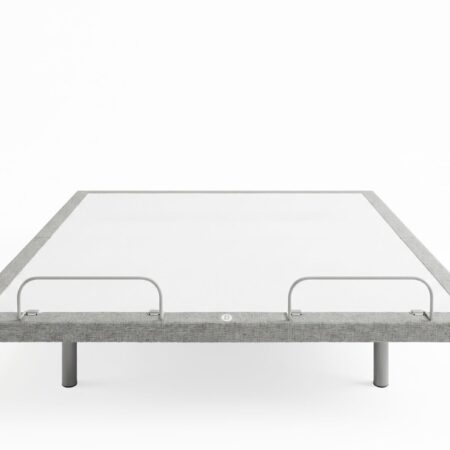
The counterintuitive part: Steel is denser than aluminum, so a steel frame should weigh more — in theory. Bloome’s engineering achieves a steel frame that’s 30% lighter than comparable aluminum-framed competitors through structural optimization: removing steel where it isn’t load-bearing, reinforcing exactly where it is. The result is a 1,000 lb rated frame that’s easier to move upstairs than most budget aluminum alternatives.
BH 1000
Who Actually Needs a 1,000 lb Rated Frame
The short answer: more people than the marketing suggests. Here are the buyers who specifically benefit.
Heavier individuals and couples
The obvious use case. If you and your partner total more than 400 lbs and you add a 70–100 lb king mattress, you’re already at 500+ lbs before accounting for any dynamic load from adjustment. Operating a 600 lb rated frame at 85% capacity means you’re always near the limit — motors run harder, frames flex more, and wear accumulates faster. People managing back pain with an adjustable bed tend to adjust position more frequently overnight, which compounds the wear.
Anyone using a heavy mattress
Hybrid and innerspring mattresses designed for adjustable bases are heavier than standard foam. A king-size hybrid can weigh 100–130 lbs. That’s load the frame has to handle before a single person lies down. On a 750 lb rated frame, a heavy mattress plus two average-weight adults plus bedding already puts you at 80–90% of rated capacity.
People who want a 10-year frame, not a 3-year frame
Even if your total load never approaches 1,000 lbs, a frame engineered for that capacity experiences far less mechanical stress at your actual load. Motors that never work near their limit last longer. Joints that never approach their yield point don’t develop play. You’re buying headroom — and headroom translates directly to longevity.
Buyers who move frequently
If you move apartments every two to three years, an adjustable bed that’s lighter than its capacity class and assembles in 15 minutes without tools is a material quality-of-life improvement. Bloome’s steel frame was specifically engineered for this: the structural optimization that reduces weight is the same reason it doesn’t require hardware-intensive installation.
People with chronic pain or medical conditions
If you’re adjusting position multiple times per night to manage sciatica, acid reflux, snoring, or circulatory issues, your frame is working significantly harder than one used by a healthy sleeper who stays flat all night. High-cycle-count use cases benefit disproportionately from over-built frames. You can read more about how adjustable beds help with back pain relief and the positions that work best for each condition.
How Bloome Compares to Other Adjustable Bed Brands
The key specs across the adjustable bed market, focused on weight capacity and structural
| Spec | Bloome Steel Frame | Typical Budget Frame | Typical Premium Frame |
|---|---|---|---|
| Weight capacity | 1,000 lbs | 600–650 lbs | 700–750 lbs |
| Frame material | Reinforced powder-coated steel | Aluminum / composite | Aluminum / steel hybrid |
| Frame weight | 30% lighter than comparable models | Standard | Heavy |
| Assembly time | ~15 min, tool-free | 30–60 min, tools required | 45–90 min, tools required |
| Zero clearance | ✓ Fits inside existing frame | ✗ Usually not | ✗ Sometimes |
| Warranty | 10 years | 1–3 years | 5–10 years |
| Price (queen) | $1,699 (50% off MSRP) | $400–$800 | $1,500–$3,000 |
| Motor speed | 2× faster than industry standard | Standard | Standard–fast |
| Split configuration | ✓ Split King available | Sometimes | ✓ |
Bloome’s position is deliberate: premium structural specs — 1,000 lb steel frame, 10-year warranty, faster motors — at a price point that competes with mid-range aluminum alternatives. The 50% sale currently puts it below most comparable steel-framed beds on the market.
BH 1000
What Else to Look for Beyond Weight Capacity
Weight capacity is the foundation. A complete checklist for serious buyers also covers the following.
Motor quality and adjustment speed
Cheap motors are the leading cause of premature adjustable bed failure. Signs of a quality motor: quiet operation under load, smooth transitions without jerking, and speed that doesn’t feel like you’re waiting. Bloome’s motors adjust positions approximately twice as fast as industry standard — material when you wake at 3am and need a quick position change without lying in transition for 90 seconds.
Zero gravity preset
The zero gravity position — legs slightly above heart level, head elevated 15–30° — is the configuration most frequently cited for back pain relief and improved circulation. A 1,000 lb frame should reach and hold this position without motor strain. Frames operating near capacity limit will drift from preset positions over time as motors compensate for sustained load.
Zero clearance compatibility
Zero clearance design means the adjustable base sits inside your existing bed frame rather than replacing it. Most adjustable bases on the market are not zero clearance. Bloome’s is — a significant convenience for buyers upgrading an existing bedroom without starting over. Our about page covers how Bloome’s engineering approach prioritizes practical compatibility over spec-sheet features.
Warranty structure
A 10-year warranty on a steel frame is meaningful. A 1-year warranty on an aluminum frame tells you something about expected lifespan. Check: does it cover the motor separately from the frame? Are electronics included? Bloome’s 10-year warranty covers the frame, motor, and electronics. If you have specific questions, the Bloome contact page connects you directly with the team.
Split king configuration
For couples with different sleep preferences, a split king allows each side to adjust independently. At Bloome’s combined 1,000 lb capacity, each side of the split king supports up to 500 lbs individually — well above the 300–350 lb per-side limit common in budget split options.
Mattress compatibility
Memory foam and latex work best with adjustable bases; standard innerspring coils can crack under repeated articulation. Bloome’s frames are compatible with all major mattress manufacturers offering flex-compatible products. If you’re choosing a mattress alongside the frame, our back pain and adjustable bed guide covers the mattress types that deliver the most benefit at each position.
Frequently Asked Questions
Does the 1,000 lb capacity include the mattress weight?
Yes. Bloome’s 1,000 lb capacity is the total load rating inclusive of mattress, bedding, and sleepers. A typical queen hybrid mattress weighs 70–100 lbs, leaving 900+ lbs of remaining capacity for sleepers and bedding.
Why is steel heavier but the Bloome frame lighter than competitors?
Bloome’s steel frame uses structural optimization — reinforcing load-bearing connection points with thicker steel while removing material where it isn’t structurally necessary. The result is a frame that’s 30% lighter than comparable steel-framed models without compromising the 1,000 lb rating. It weighs less than many aluminum alternatives while being significantly stronger.
Can I use the Bloome Steel Frame with my existing bed frame?
Yes. The zero clearance design means it sits inside most existing bed frames rather than replacing them. If you have a platform bed, storage frame, or upholstered headboard you want to keep, Bloome is compatible. This is uncommon in the adjustable bed market — most bases require removing the existing frame entirely.
What’s the difference between the Bloome Adjustable Bed and the Steel Frame model?
Both models support up to 1,000 lbs and share the same core motor and electronics. The Steel Frame model emphasizes structural build and targets buyers prioritizing capacity and durability. Both are priced at $1,699 (50% off MSRP of $3,399) and available in split king. The choice comes down to aesthetic preference and configuration.
Is a 1,000 lb frame necessary if I weigh under 300 lbs?
Not strictly necessary — but beneficial. Higher capacity means motors and joints operate well within their limits at your actual load. In practice: quieter operation, smoother adjustments, less vibration over time, and longer motor lifespan. Think of it like engine displacement: a higher-rated engine towing the same weight runs cooler and lasts longer than a smaller one working near its limit.
Does the Bloome frame work with a memory foam mattress?
Yes. Memory foam and latex are the most compatible types for adjustable bases and work well with Bloome’s frame. Hybrid mattresses labeled “adjustable base compatible” also work. Standard coil innersprings are generally not recommended — the coil structure can be damaged by repeated articulation.
How long does assembly actually take?
Most customers report 10–20 minutes. The frame unfolds, legs attach without tools, and it plugs in. No hardware or instructions manual required for most steps. Designed for solo assembly — no second person needed.
What does the 10-year warranty cover?
The Bloome warranty covers the steel frame, motors, and electronics for 10 years. Structural failures — frame cracking, joint failure, motor malfunction — are all included. Normal cosmetic wear may have different terms. Contact the Bloome team for details specific to your use case.