
Adjustable Bed for Heart Failure FSA: What You Need to Know Before Buying
 Bloomehome
November 12, 2026
1 Comment
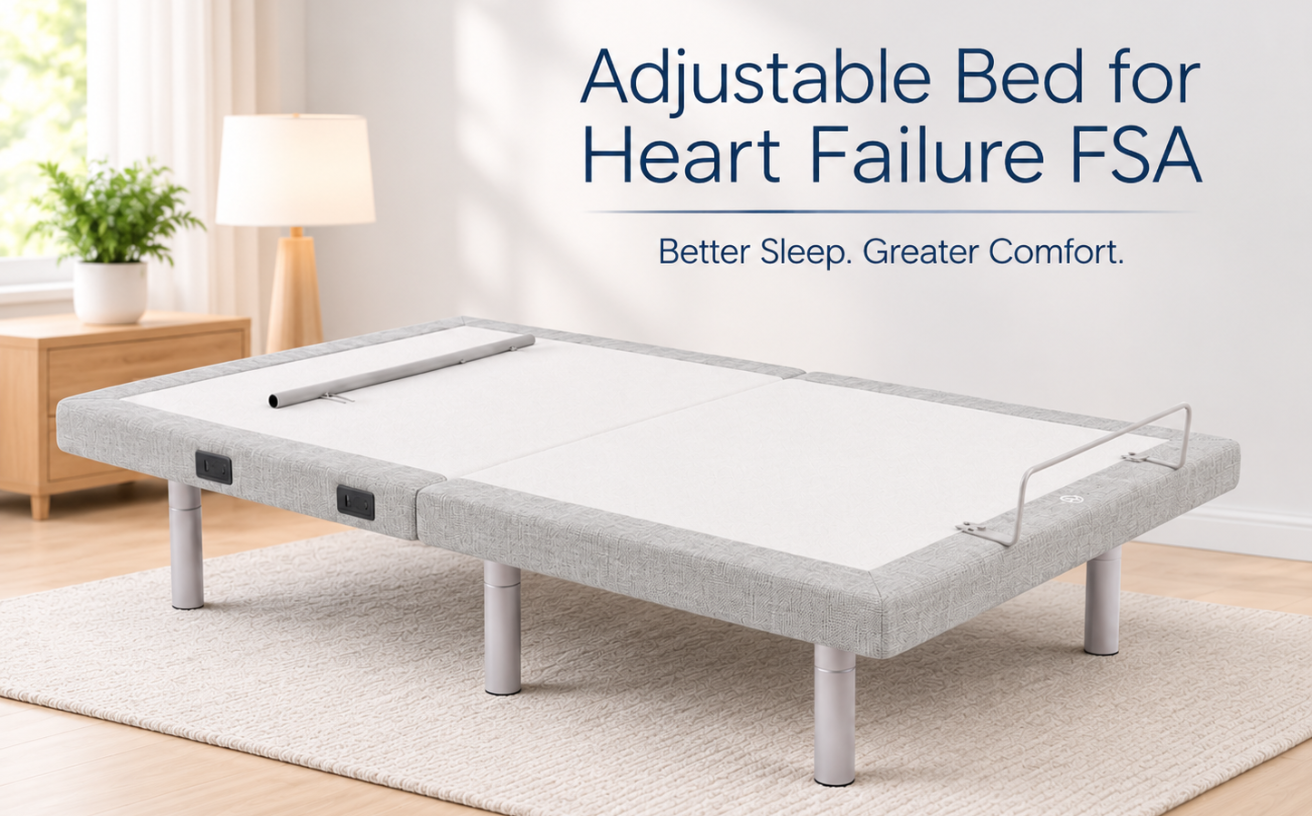
A person living with heart failure may have a very different experience of bedtime than someone without the condition. While one person looks forward to lying down after a busy day, another may struggle to find a position that makes breathing comfortable. They might spend time arranging pillows, raising their upper body, or changing positions throughout the night.
This difficulty can be associated with orthopnea, a symptom in which breathing becomes uncomfortable when lying flat. For people experiencing this problem, an adjustable bed may offer greater control over how they rest. However, purchasing one also raises a practical question: Can FSA funds cover an adjustable bed when it is needed for a medical condition?
Let’s explore the connection between heart failure, sleeping positions, adjustable bed features, and medical expense eligibility.
Why Heart Failure Can Make Sleeping Difficult
Heart failure can affect how blood circulates through the body. In some individuals, increased fluid pressure can contribute to congestion in the lungs, making breathing more difficult.
These symptoms may become noticeable when lying horizontally. Some people find themselves sleeping with their upper body raised or getting out of bed because remaining flat feels uncomfortable.
This can affect more than nighttime comfort. Repeated interruptions may leave individuals feeling tired during the day and make their usual bedtime routine difficult to maintain.
Some commonly experienced challenges include:
- Difficulty breathing when lying completely flat.
- Needing an elevated position to rest comfortably.
- Waking up because of nighttime breathlessness.
- Frequently changing sleeping positions.
- Depending on several pillows to support the upper body.
These symptoms deserve medical attention, particularly if they are new or worsening. An adjustable bed may help with positioning, but it cannot replace heart failure treatment.
Can an Adjustable Bed Help With Heart Failure?
One limitation of a traditional bed is that its sleeping surface remains flat. Pillows can provide elevation, but they do not always offer consistent support or allow easy changes in position.
An adjustable base approaches this differently. Instead of changing the arrangement of pillows, users can raise or lower different sections of the mattress using a remote.
For someone who has been advised to sleep with their upper body elevated, this flexibility may be useful.
Consider these practical differences:
Controlled Head Elevation: Users can adjust the upper section to find an angle that suits their prescribed resting position.
Independent Leg Movement: Some models allow the foot section to move separately, giving users additional positioning choices.
Position Memory: Certain adjustable bases can save preferred settings, reducing the need to readjust the bed each time.
Convenient Adjustments: Motorized movement makes changing the bed’s angle easier than manually rearranging pillows or supports.
The most appropriate position depends on the individual’s medical needs. Not every preset or elevation setting is suitable for every person with heart failure.
Is an Adjustable Bed for Heart Failure FSA Eligible?
For families managing ongoing healthcare expenses, purchasing specialized equipment can require careful financial planning. This is where a Flexible Spending Account (FSA) may become relevant.
An FSA allows eligible employees to use money set aside before taxes for qualifying healthcare expenses. However, buying something that offers comfort or supports a healthier lifestyle does not automatically make it an eligible expense.
An adjustable bed may qualify when its primary purpose is to treat or alleviate a specific medical condition and it meets the applicable IRS and plan requirements.
For example, a healthcare provider may determine that a patient experiencing orthopnea needs an adjustable sleeping surface to maintain a medically appropriate position. This is one reason people researching an Adjustable Bed for Heart Failure FSA purchase should understand the documentation requirements before placing an order.
Before making a purchase, buyers should establish:
- Whether their medical circumstances support the purchase.
- Whether a Letter of Medical Necessity is required.
- Whether the specific adjustable bed qualifies under their FSA plan.
- Whether payment must be made through a particular process.
- What receipts or supporting documents must be submitted.
The FSA administrator makes the final eligibility determination. Having heart failure does not automatically guarantee reimbursement.
How a Letter of Medical Necessity Can Help
A Letter of Medical Necessity provides a healthcare provider’s explanation of why a particular product is needed for a patient’s medical condition.
For someone with heart failure, the documentation should explain the connection between their symptoms and the need for an adjustable sleeping surface.
Rather than simply stating that an adjustable bed would improve sleep, the healthcare provider may document:
- The patient’s heart failure diagnosis.
- Relevant symptoms, including orthopnea, when present.
- Why lying flat creates a medical difficulty.
- The need for specific adjustments, such as upper-body elevation.
- The expected period during which the equipment will be needed.
The letter must reflect the provider’s independent medical judgment. Bloome Home cannot prescribe the equipment or guarantee FSA approval.
Customers should also check their administrator’s requirements before purchasing, as documentation and reimbursement procedures can differ between plans.
What Should You Look for in an Adjustable Bed?
When the main requirement is changing sleeping positions, selecting the right features becomes more important than choosing a bed simply because it has the most functions.
Here are some points worth considering:
- Head adjustment: Look for a base that allows controlled upper-body elevation.
- Separate movement: Independent head and foot adjustment provides more positioning combinations.
- Remote accessibility: Simple controls make adjustments easier to manage.
- Saved settings: Memory functions can be useful when a preferred position has been established.
- Construction: Check the frame’s weight capacity and overall build quality.
A healthcare provider can help identify which adjustments are relevant to the patient’s condition.
How Bloome Home Makes Adjustable Positioning Easier
Bloome Home approaches adjustable bed design with an emphasis on movement speed, practical controls, and durable construction.
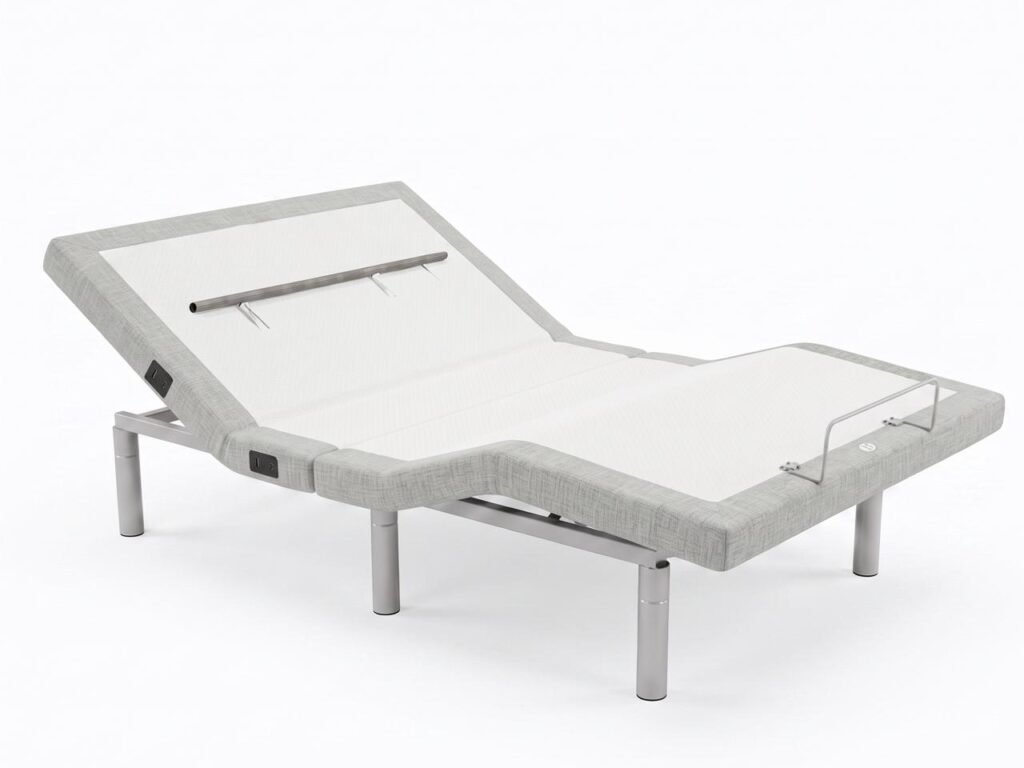
Its BH3000 model is particularly worth exploring for people looking for essential motorized adjustment without an unnecessarily complicated setup.
Some of its features include:
- Independent head and foot adjustment.
- A Zero-Gravity preset.
- One-touch return-to-flat functionality.
- One programmable memory position.
- Wireless remote with a built-in flashlight.
- Bluetooth capability and USB charging.
- Three-in-one adjustable metal legs.
- 850 lb weight capacity.
The BH3000 motor operates at 10 mm per second, approximately twice the commonly cited 5 mm per second category standard. This makes position changes quicker and reduces the waiting time when adjusting the base.
Bloome Home also provides substantial warranty coverage, including 10 years of full coverage on the steel frame and three years of full coverage on electronic components.
You can explore the Bloome BH3000 adjustable bed to review its specifications and available sizes.
Frequently Asked Questions
1. Can someone with heart failure use FSA funds to purchase an adjustable bed?
Possibly. The purchase must meet applicable medical expense requirements. A Letter of Medical Necessity may be required, and the FSA administrator determines whether the expense qualifies.
2. What type of adjustable bed is suitable for someone experiencing orthopnea?
A motorized adjustable base with independent head elevation may be worth considering. The appropriate elevation and features should be determined with a healthcare provider.
3. Does a Letter of Medical Necessity guarantee FSA reimbursement?
No. It provides medical documentation supporting the purchase, but the administrator must still review the expense against its requirements.
4. Can elevating the upper body make sleeping more comfortable with heart failure?
Some individuals experiencing orthopnea find an elevated position more comfortable than lying flat. However, individual results vary, and persistent breathing difficulties require medical attention.
5. Which Bloome Home adjustable bed features are useful for changing sleeping positions?
Independent head and foot adjustment, programmable memory settings, and wireless remote controls are among the features available on the BH3000.
Explore Adjustable Bed Options at Bloome Home
Finding a suitable resting position can be an important part of everyday life for someone managing heart failure. An adjustable base offers the flexibility to change the sleeping surface instead of depending entirely on traditional pillows.
Bloome Home combines faster motor movement, practical adjustment features, and sturdy construction across its adjustable bed range.
If you are researching an Adjustable Bed for Heart Failure FSA purchase, explore Bloome Home’s models, discuss the required positioning features with your healthcare provider, and confirm FSA eligibility with your plan administrator before purchasing.
Discover Bloome Home and explore adjustable bed options designed to bring greater flexibility and convenience to everyday rest.
1 comment