
Lightweight Engineering in Adjustable Beds: Why USleep’s 131 lb Frame Matters
 Bloomehome
March 24, 2026
0 Comments
Bloomehome
March 24, 2026
0 Comments
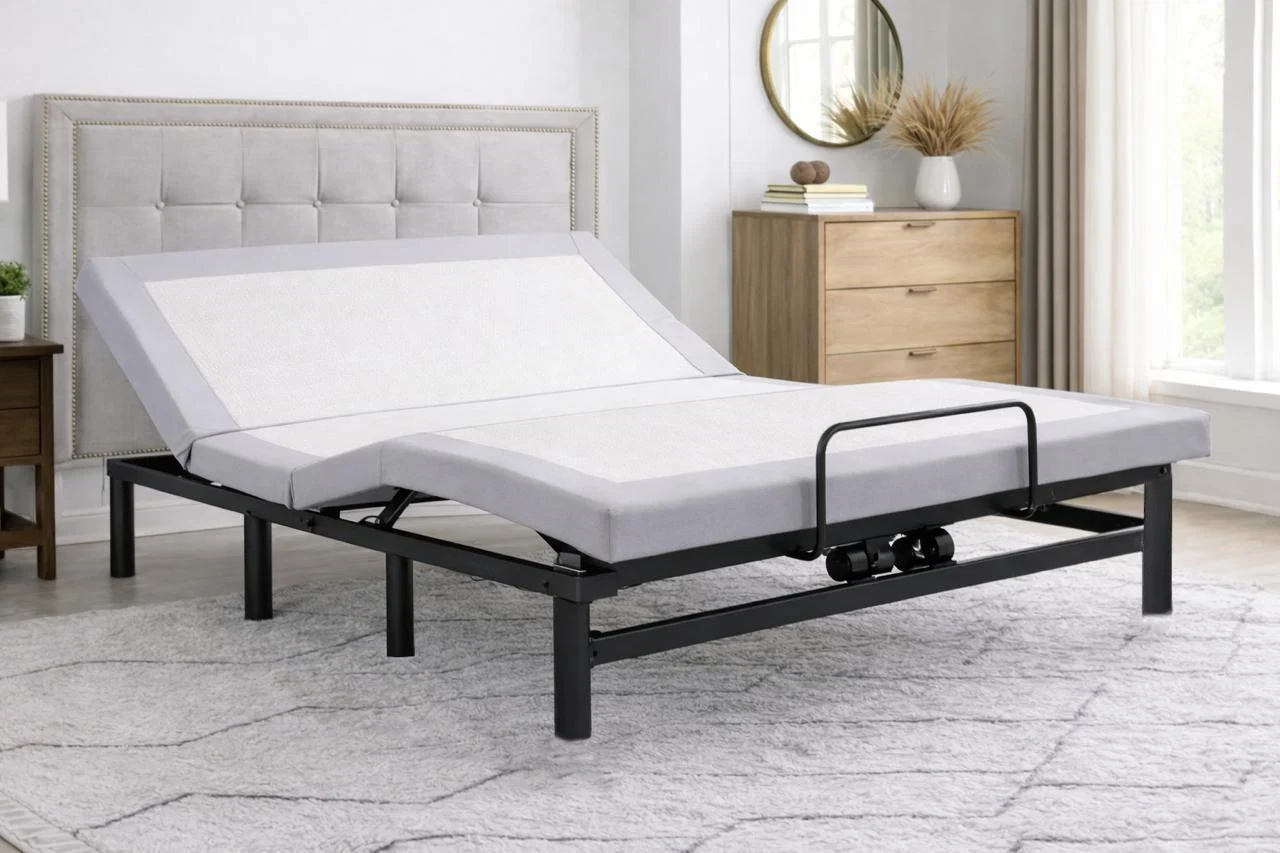
When shopping for an adjustable bed frame, most people focus on features: Does it have massage? How many positions can it achieve? What’s the remote control like? Weight rarely enters the conversation—until delivery day arrives, and you realize your new premium adjustable base weighs over 200 pounds and requires a freight truck and professional installation.
USleep’s adjustable bed frame weighs just 131 pounds. That’s up to 100 pounds lighter than comparable adjustable bases, which can weigh 230 pounds or more. This isn’t a minor detail or a happy accident of design. It’s the result of intentional engineering that prioritizes real-world usability without compromising strength, stability, or features.
The question isn’t whether a lightweight frame is nice to have. It’s why lighter matters—and what it means for how you actually live with an adjustable bed over the years.
The Hidden Costs of Heavy Adjustable Bases
Most adjustable bed frames are heavy because they’re built with traditional materials and construction methods: thick steel frames, heavy-duty motors, and structural reinforcement designed with a “more metal equals more strength” philosophy.
This approach creates real problems:
- Freight delivery becomes mandatory – Anything over 150 pounds typically requires freight shipping. That means scheduled delivery windows, possible ground-floor delivery only (no upstairs), and often additional fees—anywhere from $100 to $300 depending on location.
- Professional installation is often required or strongly recommended – Moving a 175-pound frame upstairs, maneuvering it through doorways, and positioning it precisely isn’t a job most people can or want to do themselves. That’s another $100-$200 for installation services.
- Home moves become logistical challenges – When you move to a new home, that heavy adjustable base needs to be disassembled, moved, and reassembled. Professional movers often charge extra for heavy specialty items. DIY moves become significantly more difficult.
- Room-to-room changes are effectively impossible – Want to swap your guest room and master bedroom furniture? With a 175-pound adjustable base, that’s not a casual Saturday morning project. It’s a major undertaking requiring help and careful planning.
The total hidden cost of a heavy adjustable base isn’t just measured in dollars—it’s measured in reduced flexibility, increased dependence on professional services, and limited ability to adapt your home setup as needs change.
How USleep Achieves 131 Pounds
Lightweight doesn’t mean flimsy. USleep’s 131-pound frame achieves its weight through intelligent engineering and optimized construction. The official manual also confirms that despite its lighter build, the base is designed to support up to 850 lbs evenly distributed, maintaining strength and stability without unnecessary bulk.
- Optimized frame materials – Instead of using the same heavy steel throughout, USleep employs high-strength materials strategically—using robust construction where stress and load-bearing require it, and lighter but equally capable materials where they’re sufficient.
- Efficient motor systems – Modern motor technology is significantly more compact and lighter than older designs while delivering the same (or better) performance. USleep uses contemporary motors that provide smooth, powerful adjustment without unnecessary weight.
- Streamlined construction – Every component is engineered to serve its purpose without excess. Brackets, fasteners, and connectors are designed for strength-to-weight optimization. The result is a frame that’s exactly as strong as it needs to be—no more, no less.
- Integrated design philosophy – Rather than building each subsystem separately and then assembling them, USleep’s frame is designed as an integrated whole. This eliminates redundant reinforcement and overlapping structural elements that add weight without adding value.
The outcome is a frame that weighs 131 pounds while still supporting up to 750-850 pounds total (frame plus mattress plus sleepers), providing stable head and foot articulation, and delivering the same premium features as heavier competitors.
Standard Delivery Instead of Freight
Perhaps the most immediate benefit of USleep’s 131-pound design is that it ships via standard ground delivery—no freight truck required.
What this means practically:
- No delivery windows – Freight delivery typically requires you to be home during a 4-8 hour window. Standard ground delivery works like any other package—it arrives when it arrives, and if you’re not home, it’s left at your door or rescheduled at your convenience.
- No ground-floor delivery restrictions – Freight companies often deliver to the ground floor only. If you live in a second-floor apartment or have a bedroom upstairs, you’re responsible for getting the base up there yourself. Standard delivery brings the package to your door—wherever that door is.
- No additional freight fees – Because USleep ships via standard ground delivery, customers avoid the high freight charges common with heavier adjustable bases. This aligns with the manual-supported design goal of easier home delivery and setup, sometimes more for rural or difficult-to-access locations. Standard ground shipping is included in USleep’s $999 price point.
- Faster delivery times – Freight shipments often take 2-3 weeks or more because they move on less frequent schedules. Standard ground delivery typically arrives within 5-7 business days.
For many people, this alone justifies choosing a lighter adjustable base. The difference between “wait three weeks for a freight delivery window where professionals bring it to your ground floor” and “arrives next week, left at your front door” is enormous in terms of convenience.
DIY Setup Becomes Feasible
Assembly and setup for adjustable bed frames is typically straightforward, and USleep’s lighter weight makes it even more manageable. The manual outlines a clear step-by-step process using secure locking clips, connecting rods, and mattress retainers to support DIY installation. At 131 pounds, USleep’s frame makes DIY setup realistic for most people.
- One or two people can handle it – While you’ll still want a second person to help maneuver the frame safely, 131 pounds split between two people (roughly 65 pounds each) is manageable for most adults. Compare that to 175 pounds (87.5 pounds each) and the difference in feasibility is significant.
- Standard doorways and stairs become less problematic – Weight isn’t the only challenge when moving furniture—dimensions matter too. But weight affects how carefully and slowly you need to move, how much you need to pivot and adjust, and how tired you get during the process. Lighter is dramatically easier.
- No professional installation required – While USleep’s design is straightforward enough for DIY setup, heavy bases often require professional installation simply due to weight. Saving $100-$200 on installation fees is meaningful—and maintaining the option to do it yourself provides flexibility.
The ability to set up your own adjustable base also means you’re not dependent on installer availability, scheduling, or service quality. You can take your time, do it on your schedule, and ensure it’s positioned exactly where you want it.
Moving Homes and Rearranging Rooms
The average American moves 11-12 times in their lifetime. Even if you move less frequently, you’ll likely relocate several times while owning an adjustable bed frame. Each move is substantially easier with a 131-pound base versus a 175-pound one.
- Professional movers charge less – Moving companies often categorize items by weight and difficulty. A heavy specialty item like an adjustable bed frame can incur surcharges of $50-$150 per move. A lighter frame may avoid these extra fees or fall into a lower pricing tier.
- DIY moves become viable – If you’re moving yourself with a rental truck and friends’ help, every pound matters. A 131-pound adjustable base is something you and a friend can handle. A 175-pound base might require three people or specialized equipment.
- Less risk of damage – Heavier items are harder to control during moves, increasing the risk of dropping, banging into walls, or damaging the base itself. Lighter items are easier to handle carefully and precisely.
Beyond moving homes, there’s also the matter of rearranging within your home. Maybe you want to try a different bedroom layout. Maybe you’re converting a guest room to a home office and swapping furniture around. Maybe you’re deep cleaning and need to move the bed temporarily.
All of these tasks are significantly easier when your adjustable base weighs 131 pounds instead of 175. What might have been a “call some friends and make a whole day of it” project becomes something you and one other person can handle in an hour.
Apartment Living and Tight Spaces
For apartment dwellers, lightweight matters even more. Many apartments have:
- Narrow hallways and doorways – Maneuvering heavy furniture through tight spaces is challenging. Lighter items are easier to tilt, angle, and carefully navigate.
- Multiple flights of stairs – If there’s no elevator or the elevator is too small, you’re carrying that adjustable base up the stairs. A 44-pound weight difference between USleep and a heavy competitor is the difference between difficult and nearly impossible.
- Floor weight limits – While rare, some older buildings have load-bearing restrictions for upper floors. Lighter furniture helps ensure you stay within limits.
- Easier storage if needed – If you’re temporarily storing furniture during a move or renovation, lighter items are easier to move into and out of storage units.
None of these considerations matter if you own a single-story home with wide doorways and plan to never move. But for millions of people living in apartments, condos, or multi-story homes, weight is a practical concern that affects daily life.
Long-Term Durability Isn’t About Weight
There’s a common misconception that heavier equals more durable. In reality, durability comes from material quality, engineering design, and construction methods—not raw weight.
USleep’s 131-pound frame is built to last just as long as heavier competitors. The motors are rated for thousands of cycles. The structural components are designed to handle years of regular use. The adjustment mechanisms are built from quality materials with proper tolerances.
Weight is often added through over-engineering—using thicker materials than necessary, adding redundant reinforcement, or using heavier components simply because they’re standard rather than optimized. This adds bulk without proportionally improving longevity or performance.
Modern materials science allows for lighter, stronger construction. High-grade steel alloys provide excellent strength at lower weight. Precision engineering eliminates weak points without adding unnecessary bulk. The result is a frame that’s light enough to be practical but strong enough to last.
The Environmental Angle
While not the primary consideration for most buyers, there’s an environmental benefit to lightweight design worth acknowledging.
- Less fuel for shipping – Lighter products require less fuel to transport, whether via freight truck or ground delivery. Over thousands of units shipped, this adds up to meaningful fuel savings and reduced emissions.
- Less raw material usage – Efficient engineering means using exactly the materials needed for strength and durability—no more, no less. This reduces resource consumption without compromising product quality.
- Easier recycling at end-of-life – When an adjustable base eventually reaches the end of its usable life, a lighter frame is easier to transport for recycling or proper disposal.
None of these factors should be the deciding reason to choose USleep, but they do represent nice secondary benefits of the lightweight design philosophy.
Same Features, Smarter Build
Here’s what doesn’t change with USleep’s 131-pound design, verified in the official manual:
- Head Up/Down and Foot Up/Down articulation
- Flat button reset to level position
- Head and Foot Massage with 30-minute auto shut-off
- Underbed LED lighting with 15-minute auto shut-off
- USB charging ports for bedside convenience
- Wireless remote with Flashlight function
- Stable support across Full, Queen, and King configurations
The weight reduction doesn’t come from removing features, using cheaper components, or accepting lower performance. It comes from engineering the product intelligently from the ground up.
The Bottom Line: Weight as a Real-World Feature
When evaluating adjustable bed frames, it’s easy to overlook weight in favor of more exciting features like massage settings or remote controls. But weight affects your actual experience with the product in profound ways:
- How it arrives at your home
- How much you pay in delivery and installation fees
- Whether you can set it up yourself
- How easy it is to move homes
- Whether you can rearrange rooms
- How feasible apartment living is
Full adjustable mattress base designs like USleep’s 131-pound frame deliver all the premium features you want—head and foot articulation, massage, LED lighting, USB charging, wireless control—in a package that’s 20-45 pounds lighter than typical competitors. It ships via standard ground delivery, sets up without professional help, moves easily between homes, and adapts to room changes.
This isn’t lightweight engineering for the sake of it. It’s thoughtful design that recognizes lightweight adjustable bed frame solutions don’t exist in a showroom—they exist in real homes, where real people need to receive them, install them, live with them, and occasionally move them.
At $999 with freight-free delivery, USleep’s lightweight frame isn’t just easier to live with. It’s smarter engineering that puts real-world usability on par with premium features—exactly where it belongs.